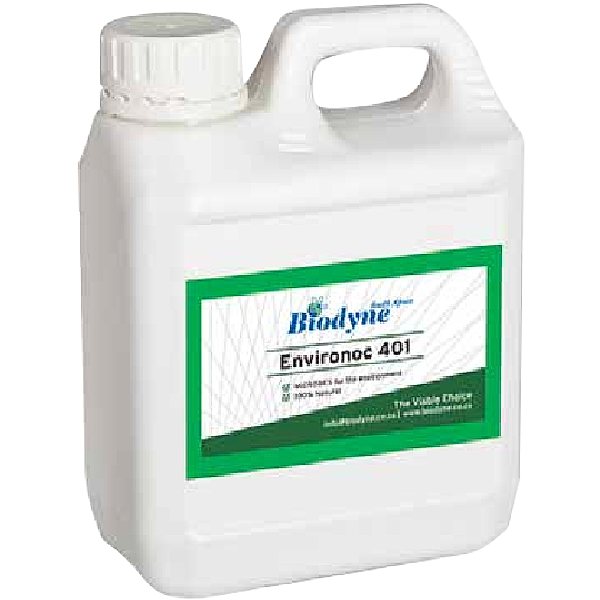
Biodyne Environoc 401 Liquid
BiodyneSoil and plant bio-stimulant applied through irrigation.
Available in401 L
In stock: Windhoek & Walvis Bay
Namibian soils are short on the one input fertiliser cannot supply: biology. Decades of heat, low organic matter and alkalinity leave root zones microbially poor — which is the gap the Biodyne programme addresses. Environoc 401 through the pivot at Hardap or Etunda, 501 turning crop residue into soil instead of smoke, Biopro Silage in the bunkers, and Biot20 bringing Trichoderma against soil disease.
Environoc cultures are non-GMO and non-pathogenic with no withholding periods — documentation available for GlobalG.A.P.-type audit files on export crops.
Dose 401 into moist soil at dusk — Namibian midday UV and surface temperatures are hard on microbes in the hour before infiltration, and evening application costs nothing.
The lines agriculture buyers draw from this category most.
Soil and plant bio-stimulant applied through irrigation.
Available in401 L
In stock: Windhoek & Walvis Bay
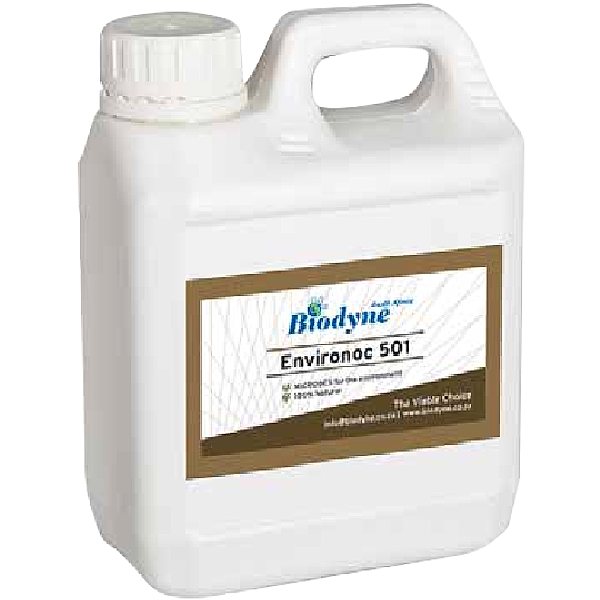
Microbial culture for composting, crop residue and effluent organics.
Available in501 L
In stock: Windhoek & Walvis Bay

Silage inoculant for better fermentation.
Available in25 L
In stock: Windhoek & Walvis Bay

Trichoderma biological for soil disease suppression.
Pack sizes on request
In stock: Windhoek & Walvis Bay
Pocket pH/conductivity tester for field water testing.
Pack sizes on request
In stock: Windhoek & Walvis Bay
Through the system you already run — pivot, drip or flood — at planting and again mid-season, when soil temperature and moisture let the culture establish. It is compatible with normal fertigation scheduling; keep it clear of chlorinated water flushes and biocide events. Growers on the southern schemes typically see the response build over consecutive seasons as biology accumulates.
That is its purpose: sprayed onto chopped residue with light incorporation and moisture, 501’s microbes degrade the carbohydrates, proteins and lipids, turning stubble into organic matter instead of ash. In our climate the constraint is moisture, so time it with irrigation or rain. The soil-carbon gain compounds yearly — burning spends it.
Considerably: high ambient temperatures push ensiling toward spoilage organisms fast, and Biopro Silage front-loads the fermentation with the right lactic bacteria before the wrong biology wins. Namibian dairy and feedlot operations using it report cooler, more stable bunkers and less top-layer loss. Inoculate at chopping — it cannot rescue a bunker after the fact.
Broadly yes, with timing discipline: separate biological applications from fungicide and soil-fumigant events, since chemistry that kills pathogens kills allies too. Herbicides are generally low-conflict. We will map your spray programme against dosing windows — it is a calendar exercise, not a conflict.
Swachem Windhoek · 2-8 Walter Street, Southern Industrial Area, Windhoek · Tel 061 235 051 · Monday – Friday, 08:00 – 17:00
Served primarily from Swachem Windhoek — 061 235 051. SDS, grades and delivery scheduling included in the quote.